Every kid learns to read by following the same path of 8 reading steps — from hearing sounds in words all the way to understanding what they read. When teachers understand this reading process, they can pinpoint exactly where struggling readers get stuck and how to help them catch up fast.
If you have a student who knows all their letters but can’t seem to blend… or one who can sound out words but reads SO painfully slow that they forget what the sentence said… then you are in the right place!
Welcome to the first post in the Be the Difference Reading Series! I am SO excited for you to start your journey to reach your struggling readers.

This blog series is meant to super-empower you to reach your struggling readers FAST. There are 3 questions we need to address for effective reading intervention:
- How do kids learn how to read?
- Why do some kids struggle?
- How do we close the gap and help them catch up?
This first post answers the question: How does a child learn to read?
📚 It centers on The Science of Reading and dives into the natural stages of learning to read that students go through to become good readers.
Now remember, this is the path that TYPICAL (non-struggling) readers take. Ideally, even our struggling readers would follow these reading steps, but as you’ll see in [Part 2 of this series], they tend to get stuck at certain points.
🎬👇 {here’s a video giving an in-depth look at the “learning to read” process!}
So let’s dive into the 8 steps for reading success!
What Are the 8 Stages of Learning to Read?
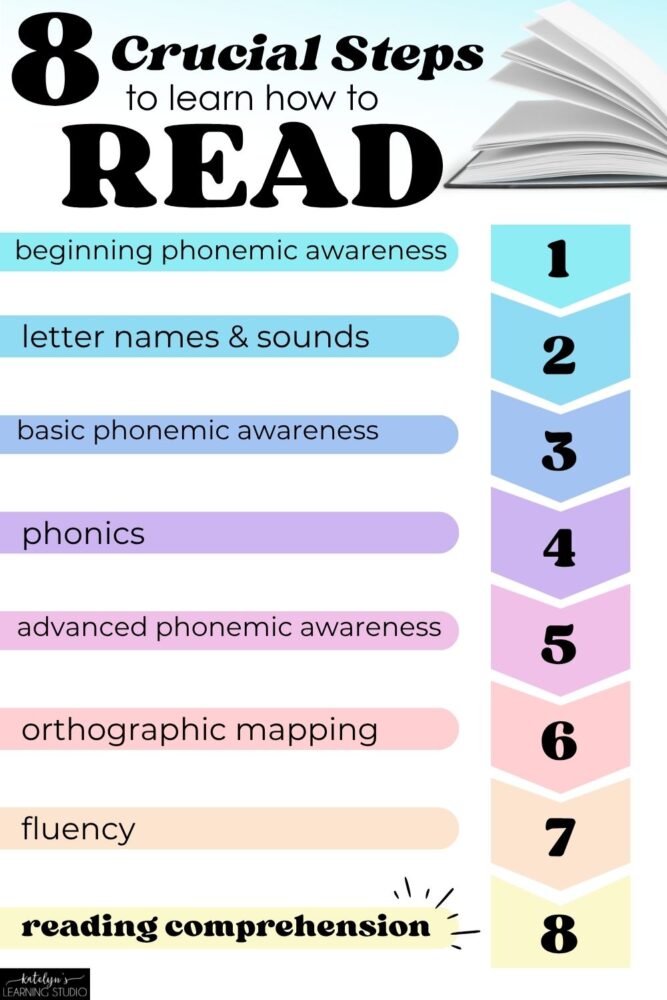
A kid learns to read by mastering these 8 reading stages in order:
- Beginning Phonemic Awareness
- Letter Names and Sounds
- Basic Phonemic Awareness (Blending & Segmenting)
- Phonetic Decoding
- Advanced Phonemic Awareness
- Orthographic Mapping
- Reading Fluency
- Reading Comprehension
These stages align with research by Dr. Linnea Ehri, who identified distinct phases that children move through as they learn to read words, from pre-alphabetic all the way to automatic word recognition (Ehri, 2005).
Let’s break down each step in the reading process!
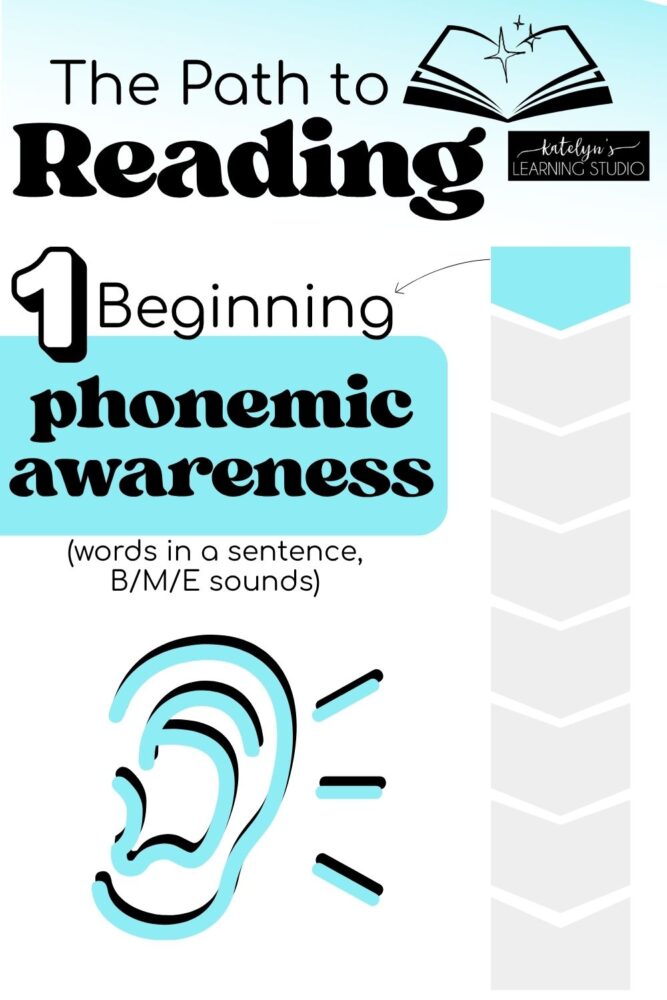
Step 1: Beginning phonemic awareness
Step 1: Beginning Phonemic Awareness
The first step in learning to read is Beginning Phonemic Awareness– basically just being aware that words are made up of sounds.
This is where reading begins!
Before a kid learns to read words on a page, they need to hear the sounds inside spoken words.
This includes noticing alliteration, rhyming, syllables, and beginning sounds of words.
Phonemes are the little units of sound that make up words.
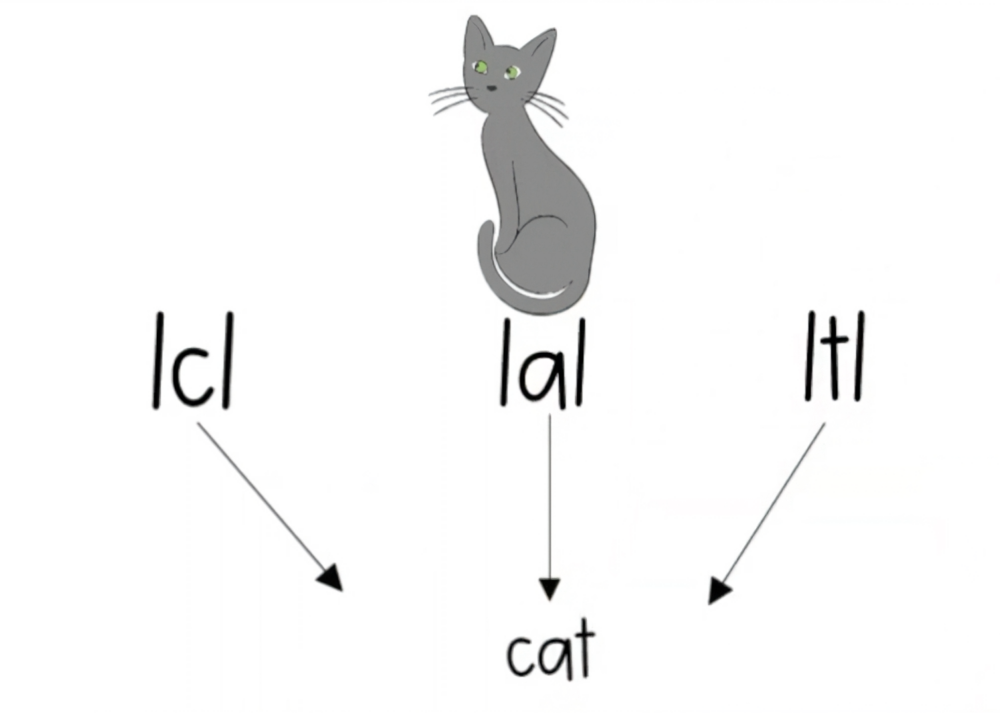
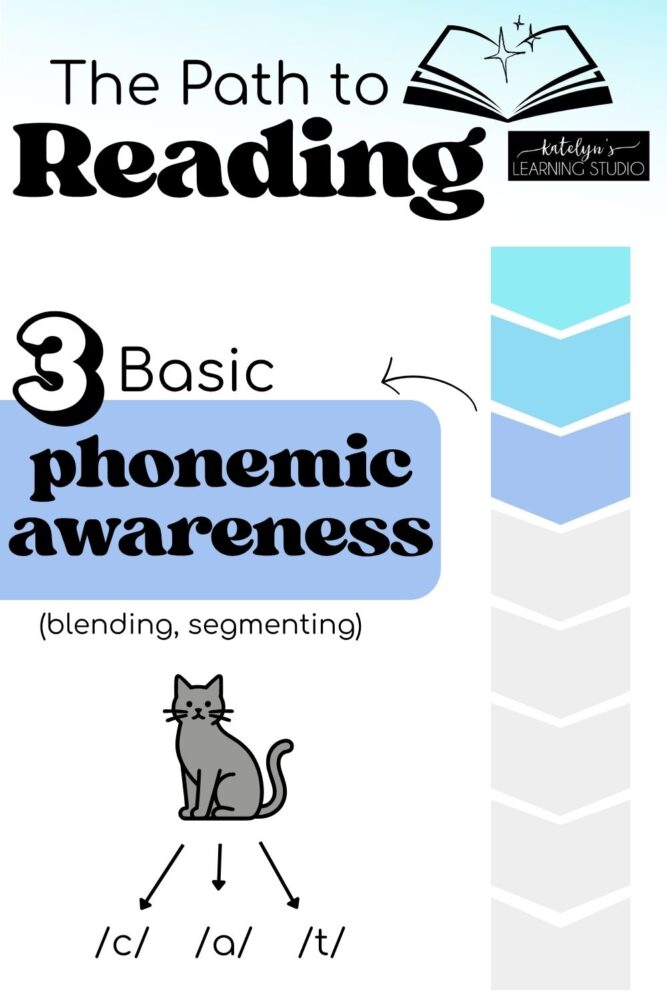
The word “cat” has three phonemes: /c/ /a/ /t/. Phonemic awareness is being aware of all those little sounds inside words.
Before kids even start learning letters, they need to know that sounds exist in words. Often, this happens naturally! Children notice when words start with the same sound (like the /b/ in Brown Bear, Brown Bear) or when words rhyme (“The dog sat on a log with a frog”).
The National Reading Panel (2000) analyzed 52 studies and found that phonemic awareness instruction had one of the largest impacts in all of reading research. Children who received PA instruction were significantly better at reading and spelling than those who didn’t.
As they get better at recognizing these sounds, they can start tying them to letters.
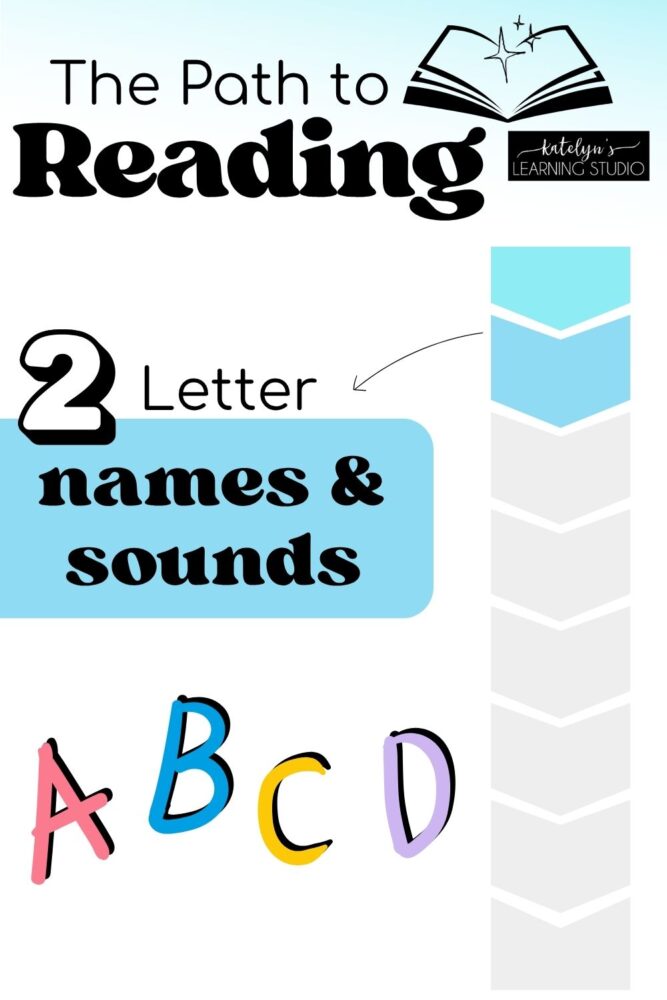
Step 2: Letter names & sounds
Step 2: Letter Names and Sounds
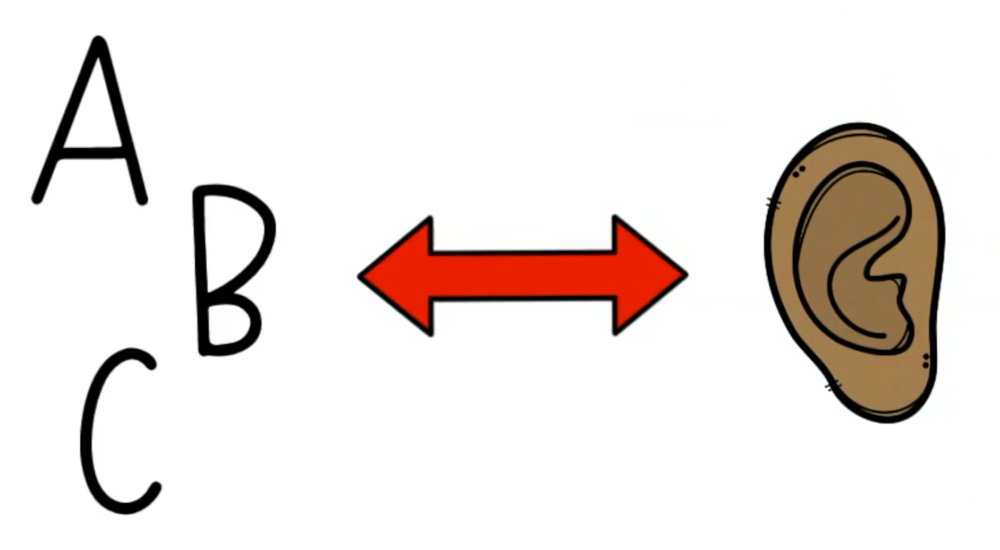
Naturally, the next reading step is learning letter names and sounds.
This is where you introduce each letter and teach what sound it makes.
Because students are already familiar with sounds from that beginning phonemic awareness stage, learning letters feels simple and natural. They already know the sounds to connect them to!
If you need a systematic way to teach letter recognition and sounds, my Letter Recognition and Sounds Activities make this step super easy with games and assessments included.
Step 3: Basic phonemic awareness
Step 3: Basic Phonemic Awareness (Blending & Segmenting)
The next stage of learning to read is Basic Phonemic Awareness.
This is where things get more advanced. It’s a critical step in how a kid learns to read!
Once students know their letters and sounds, they understand that written words are made up of letters that match sounds. Now they’re ready to master blending and segmenting.
- Blending is hearing isolated sounds and pushing them into a word. When students hear /t/ /e/ /n/ /t/, they blend those sounds together to say “tent.”
- Segmenting is the opposite, and slightly harder. Students start with a word and break it into sounds. Hearing “frog” and saying /f/ /r/ /o/ /g/.
This pushing sounds together and breaking words apart naturally prepares students to sound out words when they read.
I cover tons of activities for practicing blending and segmenting in my Ultimate List of Reading Intervention Activities!
Step 4: Phonetic decoding
Step 4: Phonetic Decoding
The next step in the reading process is phonetic decoding.
Basically, it means sounding out a word.
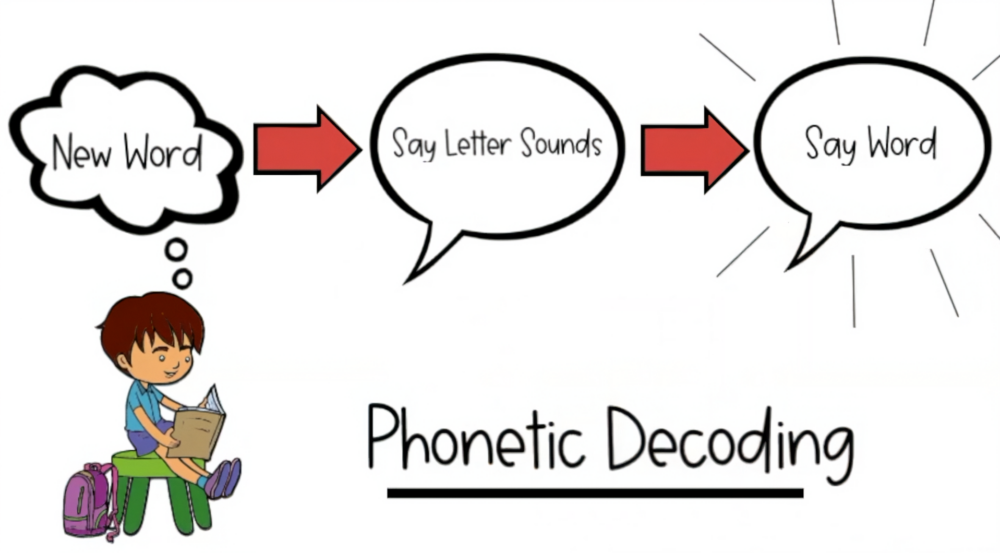
Students see an unfamiliar word, use their letter-sound knowledge to say each sound, then blend those sounds together to read the word. Show them “hug” and they say /h/ /u/ /g/… “hug!”
Everything up to now seems pretty common sense, right? A lot of people think these are the only stages of learning to read — just practice sounding out words faster and faster.
HOWEVER, there are some CRUCIAL steps going on behind the scenes.
Step 5: Advanced phonemic awareness
Step 5: Advanced Phonemic Awareness
The next crucial reading step is ADVANCED phonemic awareness, or phoneme manipulation.
This is the ability to hear a word and CHANGE the sounds to make new words. As students practice sounding out words, advanced phonemic awareness is often gained naturally.
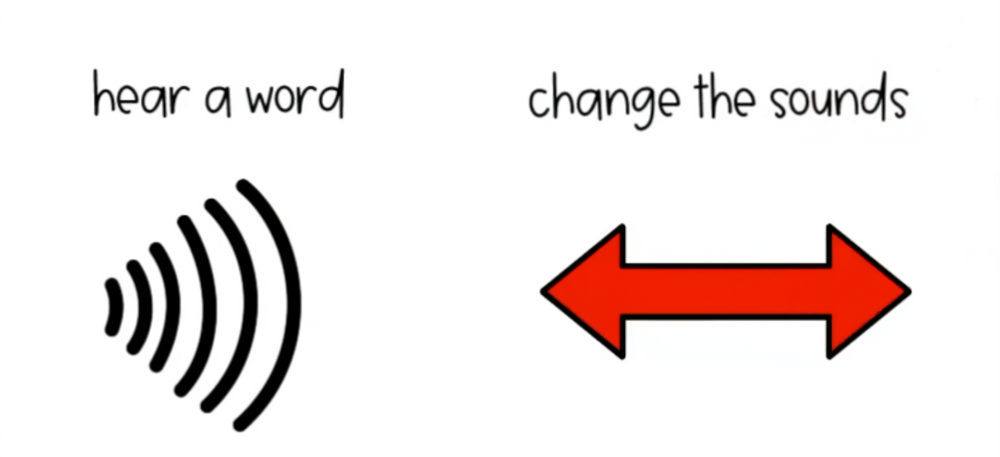
There are 3 skills included:
Phoneme Addition: Hearing “star” and adding /t/ to the end to say “start.”
Phoneme Deletion: Hearing “think,” taking away /th/, and saying “ink.” Or trickier — saying “slip” without the /l/ (answer: “sip”).
Phoneme Substitution: Hearing “cart,” switching /c/ to /m/, and saying “mart.”
Reading researcher David Kilpatrick (2015) found that these advanced manipulation skills are actually stronger predictors of reading ability than basic blending and segmenting. Students with strong phoneme manipulation can store new words in memory after just 1–4 exposures, while students with weak manipulation skills may need 20 or more encounters with the same word.
My Phonological and Phonemic Awareness Binder walks through ALL of these skills systematically– from beginning awareness all the way through advanced manipulation so you don’t miss anything!
Step 6: Orthographic mapping
Step 6: Orthographic Mapping
Once students are good at sounding words out AND have developed advanced phonemic awareness, they’re ready for: Orthographic mapping.
This is the “secret sauce” that helps kids learn to read fluently!
Orthographic mapping is how students store new words into their brain for automatic retrieval.
Researcher Linnea Ehri (2014) coined the term ‘orthographic mapping’ to describe this process — the formation of letter-sound connections that bond spellings, pronunciations, and meanings of words in memory.
This is what a lot of people don’t know about!
It’s how students turn unfamiliar words into sight words they can recognize instantly. It’s the mind’s way of mapping sounds to the letters that represent them.
I go into depth about orthographic mapping in this blog post, but that’s it in a nutshell.
As students recognize more words instantly through orthographic mapping, they read more and more fluently.
Step 7: Fluency
Step 7: Reading Fluency
Fluency only comes AFTER students have built up their store of recognizable words through orthographic mapping.
Reading fluently means reading effortlessly, at a natural pace, with few mistakes. It also means reading with prosody — matching your tone to what the text is saying.
Fluency bleeds right into our last step…
Step 8: Reading comprehension
Step 8: Reading Comprehension
This last step is comprehension– the absolute goal of reading. We read for meaning! After all, the whole reason a kid learns to read is to understand and enjoy what they’re reading.
When students read fluently, they save their brain power for understanding the text instead of figuring out what words say.
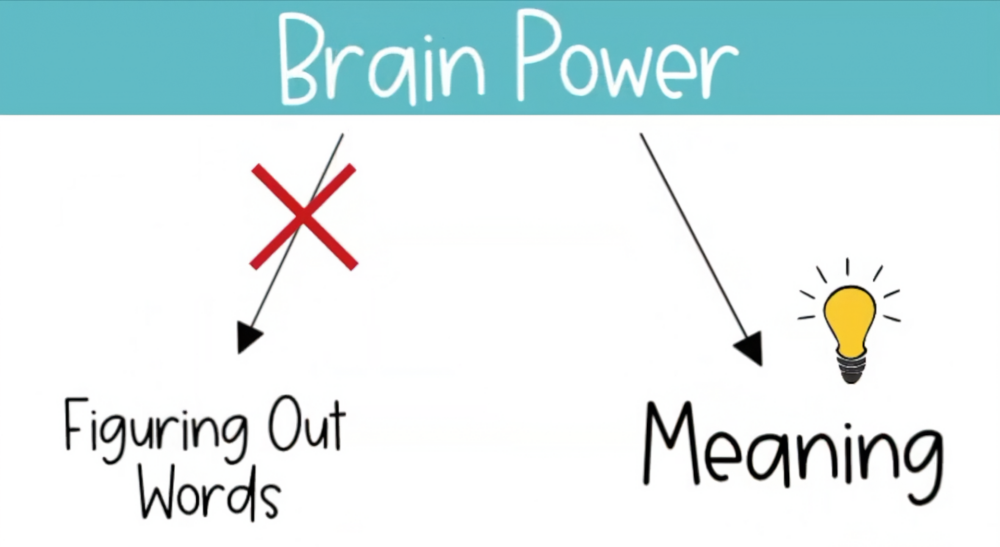
Even if students read perfectly with no mistakes, it means nothing if they don’t understand what they’re reading. Comprehension only happens when we can focus on meaning instead of decoding.
Researchers Gough and Tunmer (1986) captured this in what’s called the Simple View of Reading: Reading = Decoding × Comprehension.
It’s a multiplication equation. If either piece is missing, reading breaks down. That’s why building all of these foundational steps matters so much before we can expect real comprehension.
8 Crucial Steps Every Child Takes to Learn How to Read
How a Child Learns to Read: The Full Picture
Each step in the process of reading builds on the previous one. These reading stages of development are sequential.
You can’t jump to comprehension if the foundational reading skills aren’t there yet.
Each skill unlocks the next.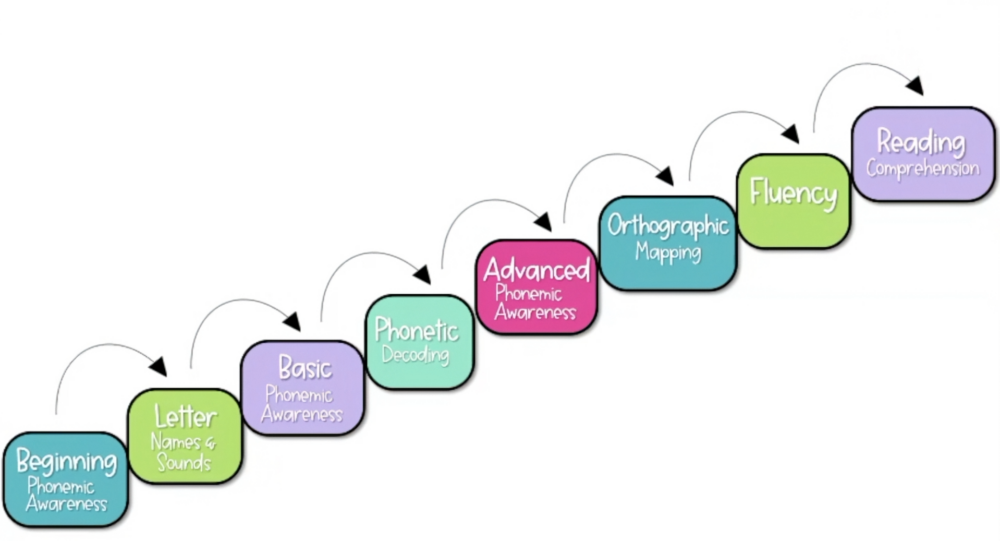
And that, my friends, is how kids learn to read!
🔑 Key Takeaway: A child learns to read by following 8 predictable reading steps. When we understand these stages of learning to read, we can pinpoint exactly where struggling readers got stuck, and help them move forward.
Why 30% of Kids Struggle to Learn to Read
Want to know something wild?
Research from the National Institutes of Health shows that this learning to read process happens naturally for about 60–70% of kids (Shaywitz, 2003).
It just clicks for them, regardless of which teaching method you use.
But what about that other 30%?
What goes wrong for students struggling to read? Where do they fall off the path?
We dig into the answer to those questions in Part 2: Why Some Kids Struggle (coming soon)! You do NOT want to miss it.
Understanding where kids get stuck is the key to helping them catch up!
Summary: The 8 Steps for Reading Success
Step 1: Beginning Phonemic Awareness (alliteration, rhyming, syllables)
Step 2: Letter Names and Sounds
Step 3: Basic Phonemic Awareness (blending & segmenting)
Step 4: Phonetic Decoding (sounding out words)
Step 5: Advanced Phonemic Awareness (addition, deletion, substitution)
Step 6: Orthographic Mapping (storing sight words)
Step 7: Reading Fluency
Step 8: Reading Comprehension
Frequently Asked Questions
At what age do most children learn to read?
Most children learn to read between ages 5-7, though the foundation starts much earlier with phonemic awareness (around ages 3-4). Every child moves through the reading stages of development at their own pace. What matters most is that they master each step before moving to the next.
What is the most important skill to teach first when learning to read?
Phonemic awareness is the most important foundational skill. Research consistently shows that children who can hear and manipulate sounds in spoken words have a much easier time connecting those sounds to letters and learning to decode.
How long does it take a child to learn to read?
For most kids, learning to read fluently takes 2-3 years of instruction (typically kindergarten through 2nd grade). However, the timeline varies based on the child, the quality of instruction, and whether they get stuck at any of the reading stages of development. With the right instruction, beginning reading can happen in months!
If you need help figuring out exactly where YOUR struggling readers are stuck on this path, grab my FREE Reading Intervention Cheat Sheet. It helps you identify who needs help, pinpoint where they need it, and know exactly how to help them.
You can absolutely make a difference for your struggling readers. You’re already on the right path! Understanding these reading stages is the first step.
Ready to move onto the next step? 👇
Continue the “Be the Difference” Reading Series:
- Part 1: How Every Kid Learns to Read: 8 Reading Steps to Unlock Reading Success (You are here!)
- Part 2: Why Some Kids Struggle to Read (Coming soon!)
- Part 3: How to Help Struggling Readers Catch Up (Coming soon!)
📌Save for later! How Kids Learn to Read: The 8-Step Science-Backed Path