Wondering how to pull off an animal research project with first or second graders without it turning into total chaos? The key is giving young students accessible text at their reading level, clear categories to guide their research, and simple tools to organize their facts before writing. When you set up these systems, even your struggling readers can successfully complete a research project they’re proud of!
My first year teaching first grade, I handed out books about ocean animals and said, “Find some facts and write them down!”
Twenty minutes later, I had kids arguing over books, others staring blankly at pages they couldn’t read, and one student who had written “sharks are cool” and called it done.
Sound familiar?
Here’s what I learned the hard way: the key to a successful animal research project is giving young students accessible text at their reading level, clear categories to guide their research, and simple tools to organize their facts before writing. When you set up these systems, even your struggling readers can complete a research project they’re proud of.
I know how frustrating it feels when you’ve planned something exciting and it completely falls apart in front of you. You start questioning whether research projects are even worth attempting with little ones. (Spoiler: they absolutely are—you just need the right framework!)
Today I’m sharing my 7-step system for running animal research projects that actually work with young learners. These steps will help you differentiate for all reading levels, keep students organized, and end up with research reports you’ll want to hang in the hallway.
So, get ready to make research time your students’ favorite part of the week!
But first…
WHY is conducting research with 1st and 2nd graders important?
Here’s something that might surprise you: research shows students in early elementary grades are exposed to informational text for an average of only 3.6 minutes per day (Duke, 2004). Three minutes! Meanwhile, by fourth grade, students are expected to read and comprehend complex nonfiction across every subject.
This disconnect is what researchers call the “fourth-grade slump”—when students who seemed to be reading just fine suddenly struggle.
🚨 The cause?
They never built the muscles for reading nonfiction because they spent years almost exclusively reading stories.
Building strong reading skills early—including comprehension of informational text—is one of the best ways to prevent this.
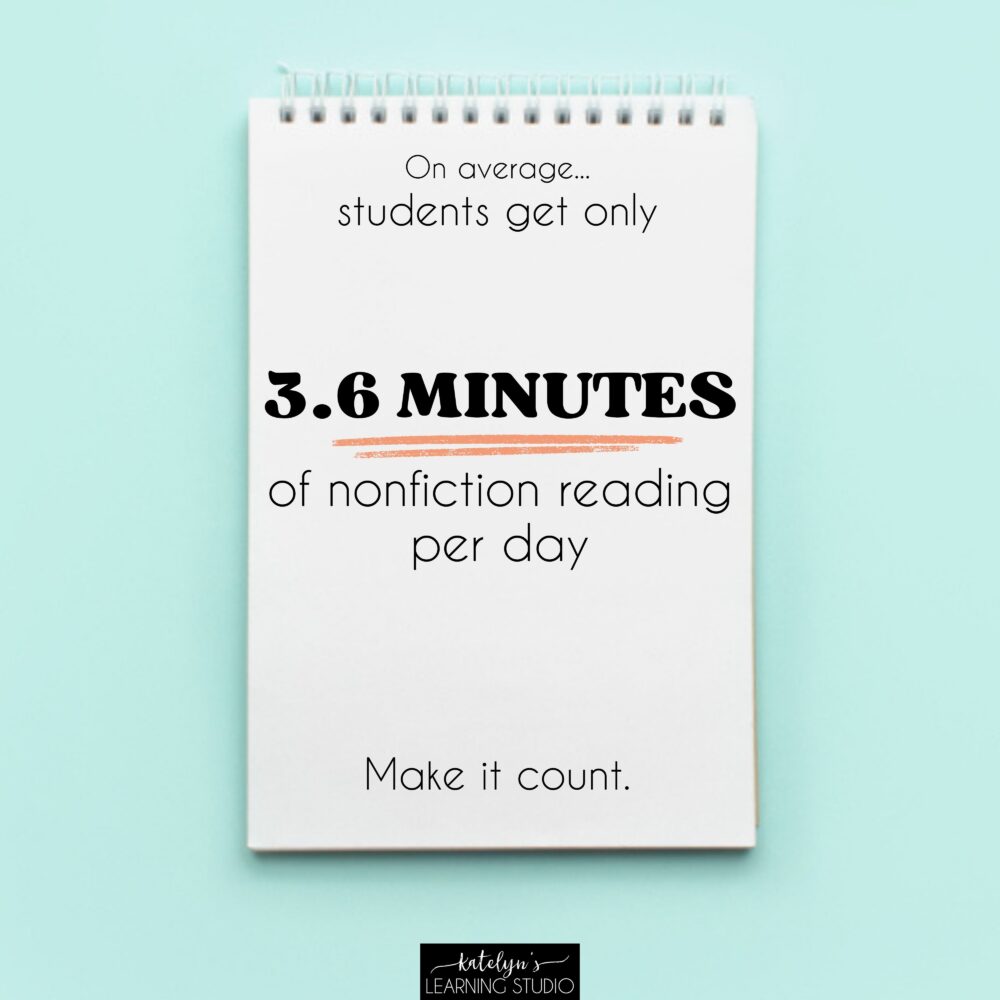
Your animal research project isn’t just a fun activity. It might be one of the most important nonfiction experiences your students get all year. And when you set it up right—with accessible text, clear guidance, and organized systems—even your struggling readers can do it successfully.
Here’s my 7-step system for making that happen.
The 7 Steps to Animal Research Project Success
Most research project guides give you tips in isolation—use graphic organizers here, differentiate there. What makes this system work is that it connects accessible text → active reading strategies → organized note-taking → differentiated support → meaningful output in one cohesive process. Each step builds on the one before it.

1. What is the #1 mistake teachers make teaching research? The text is too hard.
Here’s where most animal research projects fall apart: the text is too hard for students to actually read.
If your struggling readers can’t decode the words or comprehend the sentences, they can’t research. Period. Researcher Richard Allington (2002) found that students need to read text at their independent level—with 95% accuracy or higher—to build comprehension skills. Yet we often hand struggling readers grade-level nonfiction and wonder why they shut down.
Your options for accessible text:
- Easy-to-read nonfiction books from your library
- Kid-friendly websites like National Geographic Kids
- Databases with audio read-aloud features like readworks.org
- Leveled reading passages designed specifically for research
The goal is finding text that matches your students’ reading levels—not just their interest levels. A first grader might be fascinated by great white sharks, but if the only book you have is written at a 4th-grade level, they’re going to struggle.
This is exactly why I created my Animal Habitats Research Bundle—each animal passage comes in THREE reading levels so every student in your class can research the same animal successfully, regardless of where they are as readers.
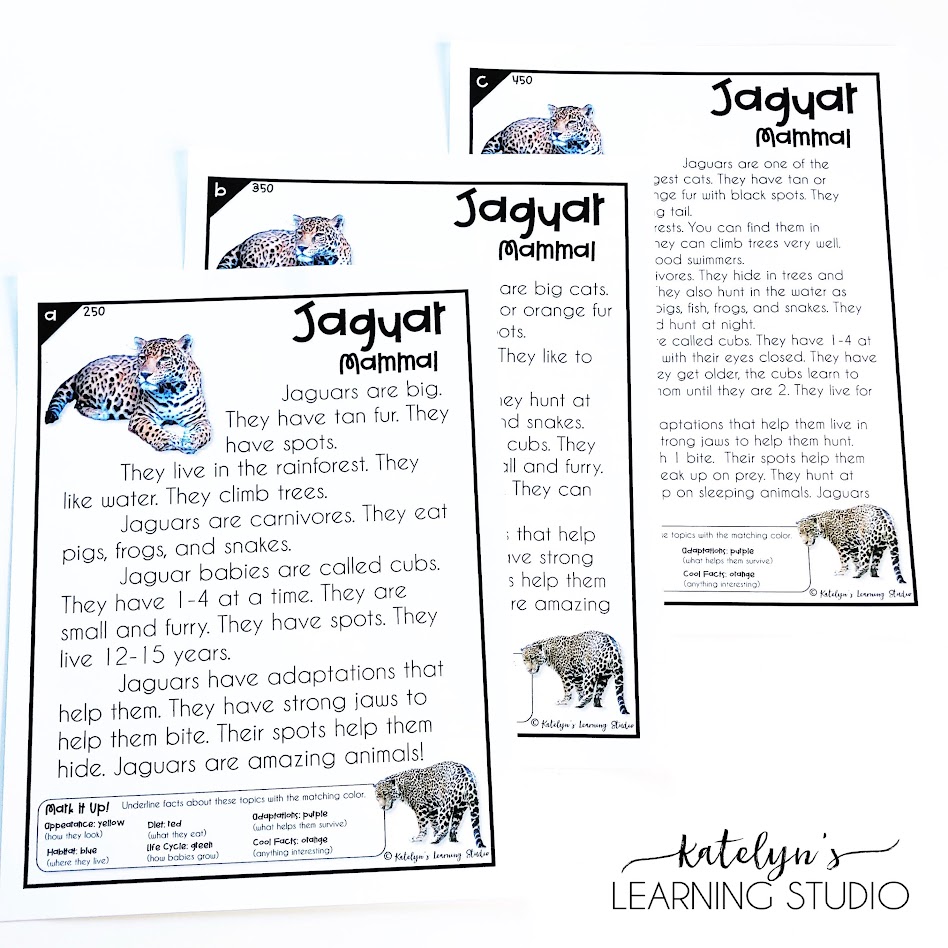
These leveled passages are perfect for helping students on all levels access nonfiction text to research.

2. How Do Clear Research Categories Prevent the “I Don’t Know What to Write” Problem?
Have you ever watched a student read an entire page and then say, “I don’t know what to write”?
That’s because they didn’t know what they were looking for! Young researchers need specific categories or questions to guide their reading. Without direction, they either write down random facts or freeze up completely.
Before students start reading, give them clear categories like:
- What does the animal look like? (Appearance)
- Where does it live? (Habitat)
- What does it eat? (Diet)
- How does it survive? (Adaptations)
- What’s interesting about its life cycle?
When students know exactly what information to hunt for, reading becomes a treasure hunt instead of an overwhelming task. Literacy researchers call this “purpose-setting”—and it dramatically improves comprehension because students are actively searching rather than passively reading (Duke & Pearson, 2002).
I like to introduce one category at a time and model how I would search for that specific information before sending students off independently.

3. What’s the Best Way to Teach Students to Mark Up Text?
This is a game-changer for young researchers!
When students can physically highlight, underline, or circle information in their text, they’re actively engaging with the material AND creating a reference they can return to when writing. This strategy—called annotation or text marking—is one of the most effective reading intervention strategies for all ages.
Here’s how to make it work:
- Print out passages or articles (or photocopy book pages) so students can write on them
- Teach a simple mark-up code—for example: underline facts about habitat, circle facts about diet, star interesting facts
- Model this process with the whole class before expecting them to do it independently
- Let students work through passages with their colored pencils or highlighters
The passages in my habitat packs include a mark-up code printed right at the bottom that coordinates with the categories in the report flipbook. Students underline facts about appearance in one color, circle diet facts in another, and so on. Then when they go to fill in their flipbook, they know exactly where to look!
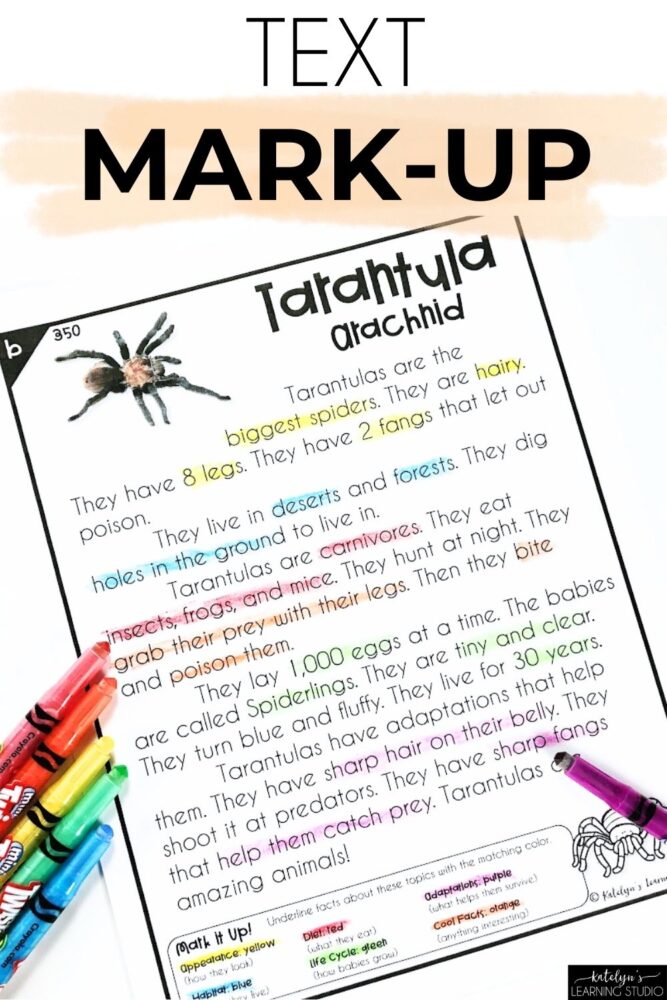
Students use a simple color-coded system to mark-up facts in their reading passages in this animal research pack.

4. How Do Graphic Organizers Help Young Researchers complete an Animal Research Project?
Students need ONE central place to put all their facts—not scattered sticky notes, random papers, and half-filled worksheets floating around their desks.
The National Reading Panel (2000) found that teaching comprehension strategies—like organizing information into categories—significantly improves reading outcomes. And a meta-analysis by Dexter and Hughes (2011) confirmed that graphic organizers have a strong positive effect on student learning, particularly for students who struggle.
A good graphic organizer helps students:
- Sort facts into the right categories
- See what information they still need to find
- Organize their thinking before they start writing
For young learners, I recommend graphic organizers that are visual and have clear, separate sections for each category. Flipbooks work amazingly well because students can flip to the section they need and add facts as they find them.
🔑 Key Point: The graphic organizer becomes the bridge between reading and writing. Without it, students often struggle to turn their research into a coherent report.
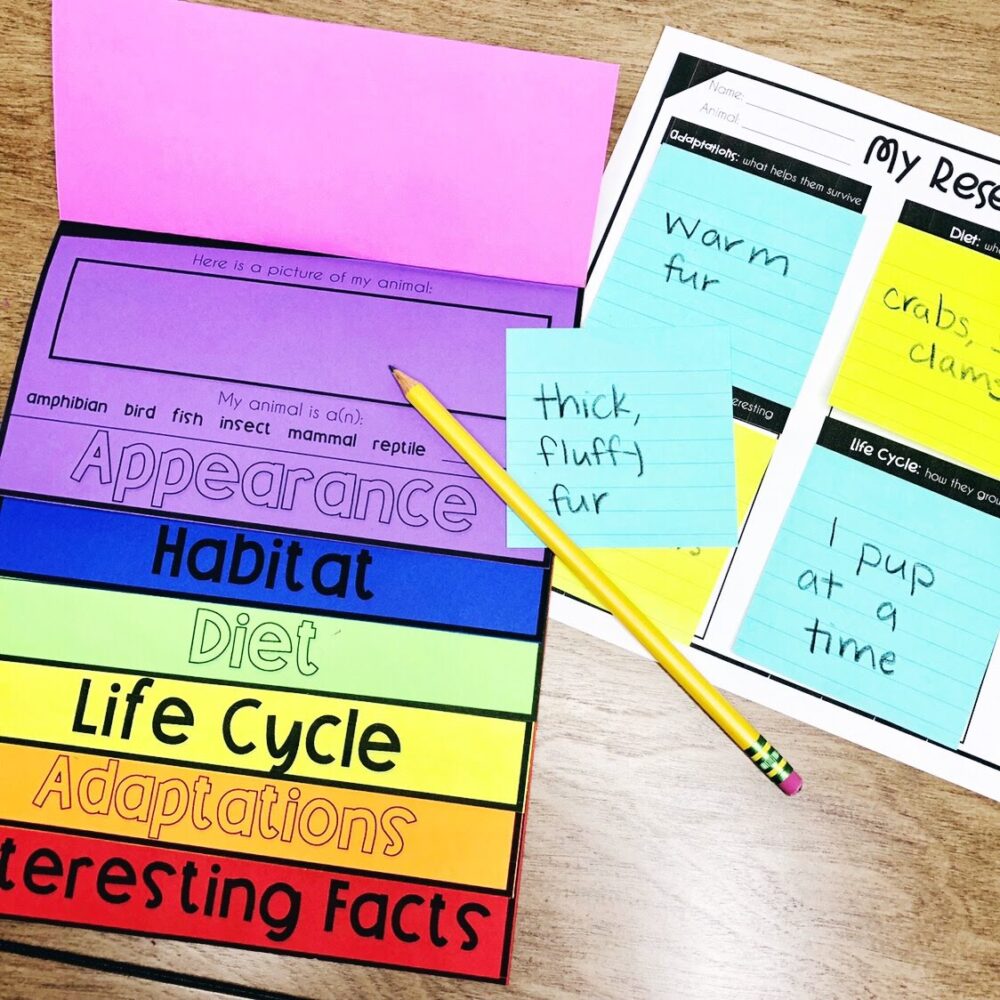
Graphic organizers like these in my Any Animal Research Project help students stay focused, find facts with out the overwhelm, and then use those facts to create a finished product.

5. What Hands-On Strategies can I use to Engage Reluctant Researchers in their Animal Research Project?
Want to know my favorite trick for reluctant writers and kinesthetic learners? Sticky notes!
There’s something about writing ONE fact on ONE small sticky note that feels so much less intimidating than filling in a worksheet. Plus, students can physically sort and move their sticky notes around, which is perfect for hands-on learners. This taps into what researchers call multisensory learning—engaging multiple senses to strengthen understanding.
Here’s the process:
- Give students a stack of small sticky notes
- As they read, they write ONE fact per sticky note
- Students sort their sticky notes into categories
- They use their sorted notes to fill in their graphic organizer or write their report
My Any Animal Research Project resource includes a sticky note graphic organizer specifically designed for this! Students write facts on sticky notes and stick them directly onto the matching category squares. It’s tactile, engaging, and perfect for students who get overwhelmed by traditional worksheets.
This resource is also great if you want students to research animals using your own classroom books or library resources instead of pre-made passages.
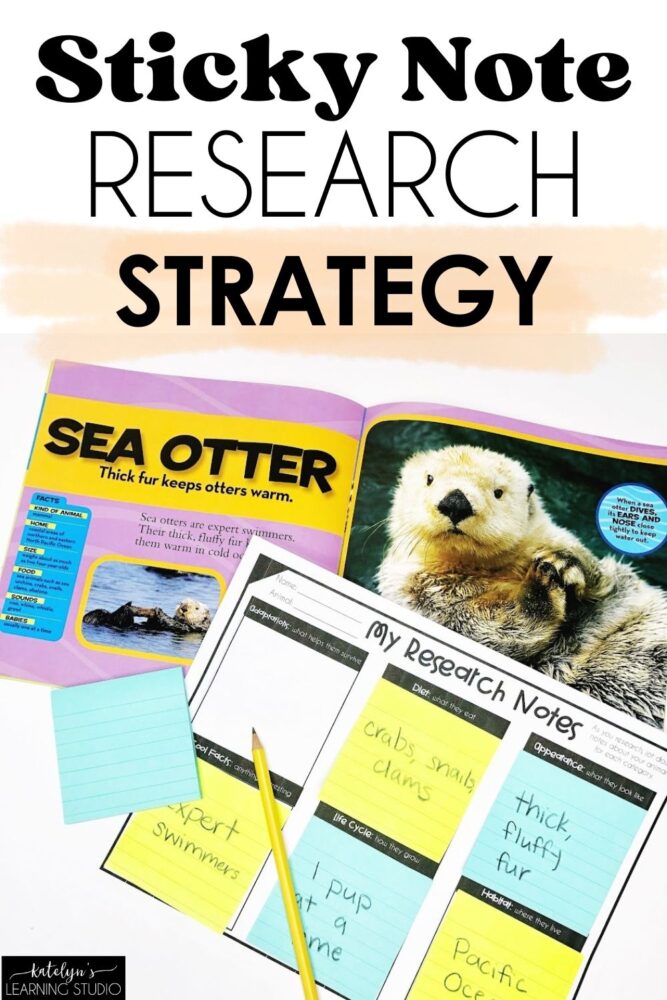
Use this Any Animal Sticky Note Graphic Organizer as a hands-on research strategy to get your reluctant researchers engaged!

6. How Do I Differentiate an Animal Research Project for Mixed Reading Levels?
Let’s talk about the elephant in the room (pun intended!): your class has students reading at MANY different levels.
You might have one student reading chapter books independently while another is still working on CVC words. How do you possibly have them all do the same research project?
DIFFERENTIATION is the answer—and it’s simpler than you might think.
The beautiful thing about research projects is that every student can learn about the same animal—they just need text at their own level. Your struggling reader and your advanced reader can both research polar bears. They can both fill out the same graphic organizer. They can both write a report and share what they learned.
The difference is in the TEXT they use to gather information.
This is exactly why every animal in my habitat packs comes with three different reading levels. Your below-level readers get a simplified passage they can actually decode. Your on-level readers get appropriately challenging text. Your above-level readers get passages that push their comprehension. Same animal, same project, same pride in their finished work—just differentiated access.
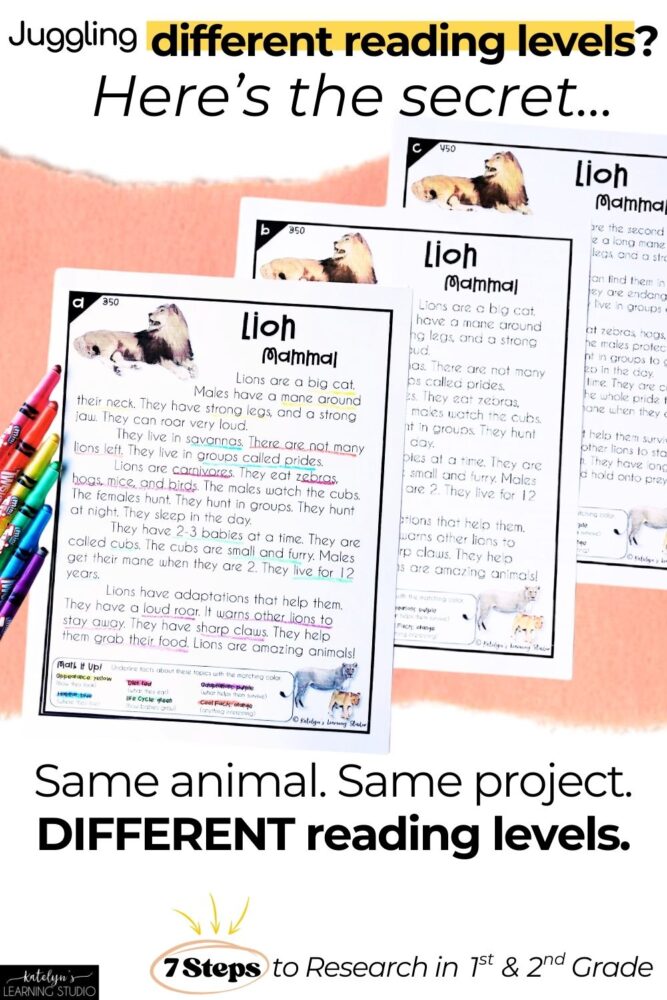
Each animal in my Animal Research Projects comes in three reading levels so every student can access the same content.

7. What Should the Final Research Product Look Like?
The last step is giving students a way to share what they learned! This is where all their hard work comes together into something meaningful.
Final product options:
- Written report on themed paper
- Poster or display board
- Oral presentation to the class
- Published “book” about their animal
When students know their research will become something real—something they can show their families or display in the classroom—they’re SO much more invested in the process. The habitat packs include themed writing paper for each animal so students can write up polished final reports that look amazing on your bulletin board!
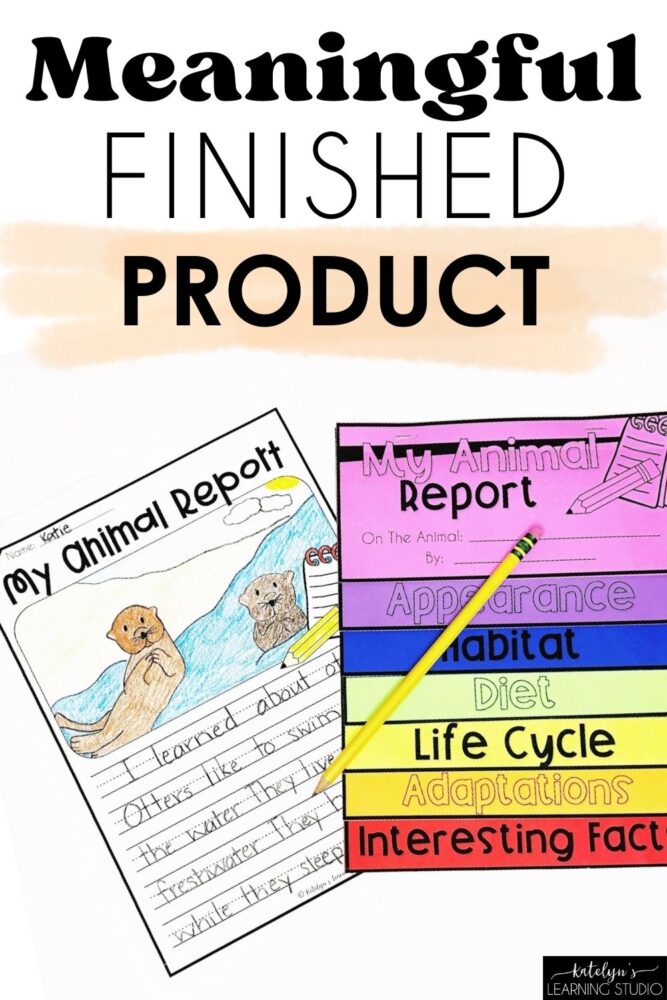
This Any Animal Flipbook Report gives students a polished final product to share.
Summary: Animal Research Project Made Simple
✅ Choose accessible text at students’ reading levels
✅ Give clear categories to guide research BEFORE reading begins
✅ Teach students to mark up and annotate their passages
✅ Use graphic organizers to organize facts
✅ Try hands-on strategies, like sticky notes
✅ Differentiate with leveled passages
✅ End with a meaningful final product
Ready to Try This With Your Class?
Imagine walking around your classroom during research time and seeing every student—even your struggling readers—actively engaged, marking up their passages, and excitedly sharing facts they discovered. That’s what happens when you have the right systems in place.
If you want to test out this research process, grab my FREE Kangaroo Research Project! It includes three levels of kangaroo reading passages plus themed writing paper—perfect for seeing how leveled research works in your classroom before committing to a larger unit.
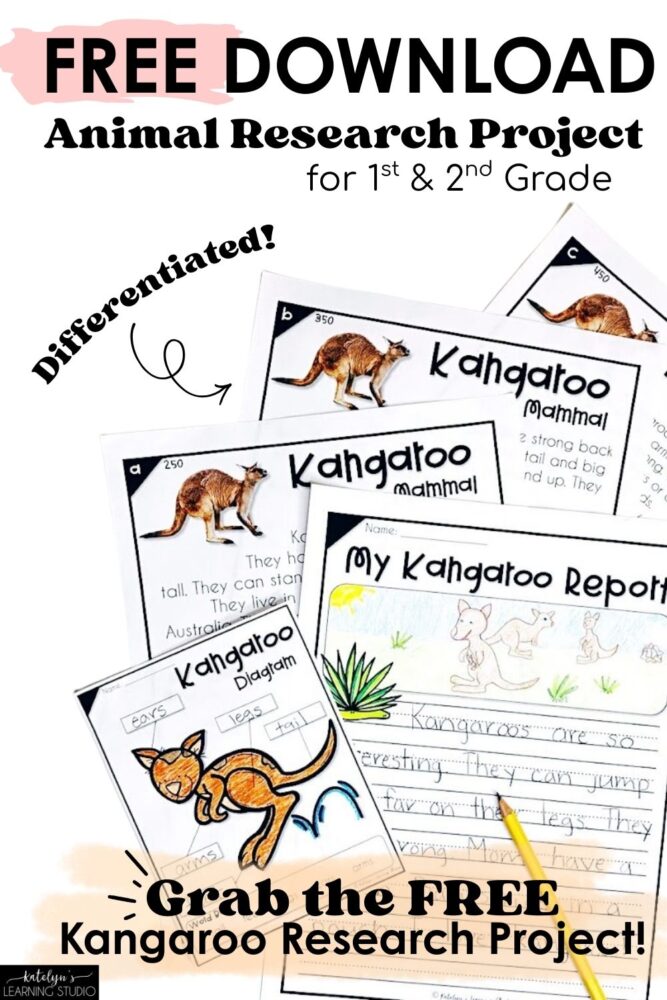
Grab this FREE Kangaroo Research Project to try it out!
And if you’re ready for a complete research unit, my Animal Habitats Research Bundle includes FIVE complete habitat packs (Arctic, Rainforest, Ocean, Desert, and African Animals) with 15 animals each—all with 3 reading levels, coordinating flipbooks, and everything you need to make research time amazing.
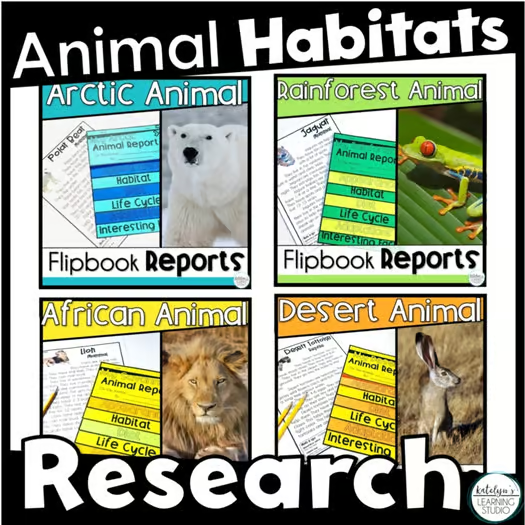
The complete Animal Research Project Bundle includes Arctic, Rainforest, African, Desert, and Ocean animal packs.
If you need help identifying which students might need extra reading support during research projects, grab my FREE Reading Intervention Cheat Sheet. It helps you pinpoint exactly where your struggling readers need help so you can support them successfully!
You can absolutely lead an engaging, successful animal research project with your young learners. With the right systems in place, your students will surprise you with what they can do.
Frequently Asked Questions About Animal Research Projects
How do I stop my students from copying sentences word-for-word from their sources?
This is one of the biggest challenges with young researchers! The best strategy is to have students read a sentence, then physically turn the book over or flip the iPad face-down before writing. Ask them, “What did you just learn?” and have them say it out loud in their own words before writing. Another trick: tell students they can only write 3-4 key words from any sentence—not the whole thing. This forces them to identify the important information and put it in their own words.
What if my students can’t read the research materials independently?
This is exactly why accessible, leveled text matters so much! Options include: using databases like readworks.org that read aloud to students, pairing struggling readers with a partner, previewing the text together as a class first, or providing passages written at multiple reading levels so everyone can access the same content. The goal is participation—every child deserves to experience the research process, even if they need support to access the text.
Should I let every student choose their own animal, or have everyone research the same one?
For your first research project, I highly recommend having everyone (or small groups) research the SAME animal together. This lets you model every step, troubleshoot common problems as a group, and ensure you have appropriate resources for everyone. Once students understand the process, you can offer more choice. Even then, consider limiting choices to animals within one habitat so you can provide focused support and resources.
My students write one sentence like “Lions are cool” and say they’re done. How do I get more details?
The solution is giving students specific categories to research BEFORE they start reading—not after. When students have clear targets like “find out what your animal eats,” “find out where it lives,” and “find one interesting fact about how it survives,” they know exactly what to hunt for. Using a graphic organizer with labeled sections also shows them visually that they need more than one fact to complete their project.
📌 Save this guide for your next research unit!