5 Types of Struggling Readers Every Teacher Has (And How to Help Each One)
Discover the 5 types of struggling readers in every classroom and learn exactly how to help each one with proven reading intervention strategies.
Whether you’re a classroom teacher, reading interventionist, reading specialist, or special education teacher… after working with struggling readers, you’ll start to notice the SAME types of kiddos show up in reading intervention groups every single year.
Once I discovered those patterns & figured out which type of struggling reader each student was, everything clicked. I knew exactly what reading intervention strategies they needed, and my small group instruction became so much more effective!
So let’s talk about these 5 types of struggling readers you definitely have in your classroom or intervention groups right now.
Even better, I’m going to show you exactly what to DO with proven strategies to help each one move forward!
✨[Be sure to read all the way to the bottom for a free guide!] ✨ ⬇️
Identify which type of struggling reader you’re working with to choose the most effective reading intervention strategies for their specific needs.
Who This Reading Intervention Guide Is For:
This post is perfect for:
- ✅ Elementary teachers working with struggling readers in your classroom
- ✅ Reading interventionists and reading specialists
- ✅ Special education teachers providing targeted support
- ✅ Title I teachers implementing RTI/MTSS interventions
- ✅ Literacy coaches looking for effective reading strategies
✨Scroll all the way down ⬇️ to learn about these ready-to-go Intervention Binders!✨
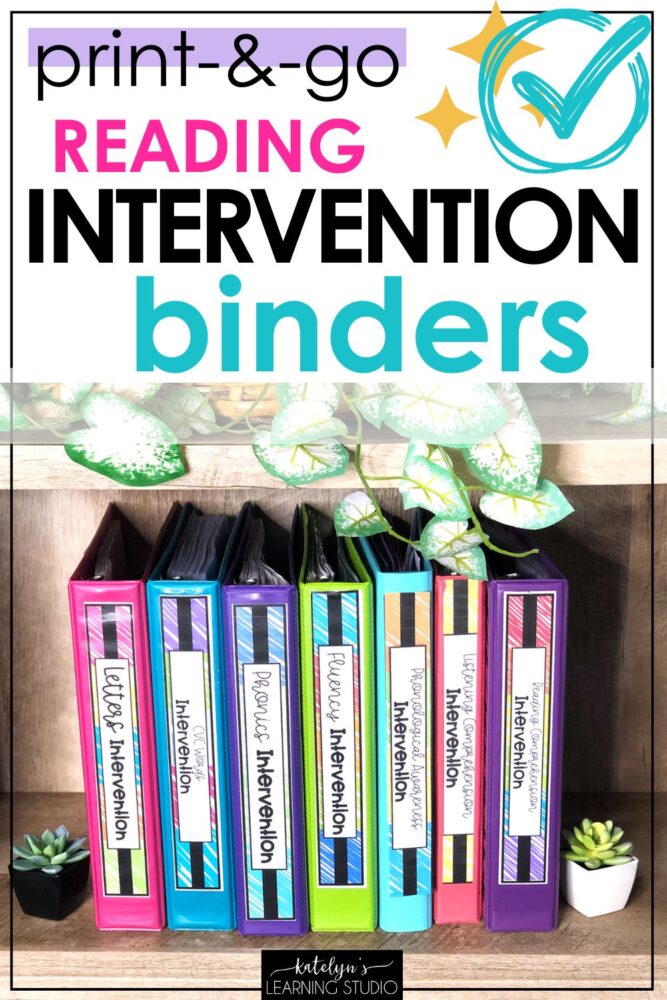
Ready-to-use reading intervention materials for all 5 types of struggling readers!
Type 1: The Guesser – Struggling Readers Who Rely on Context Clues
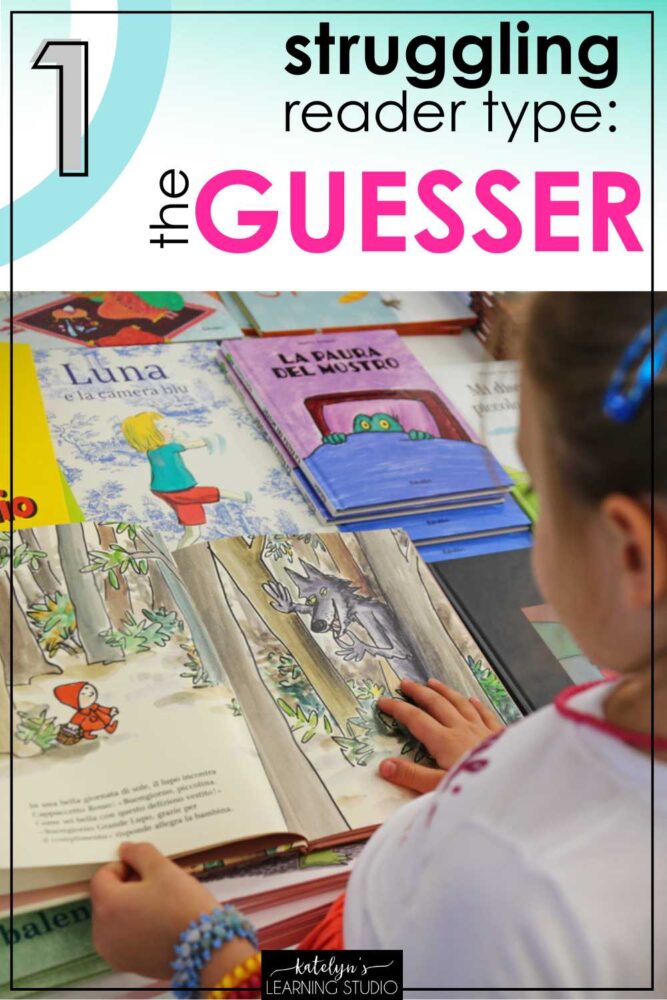
The Guesser uses pictures and context clues to guess at words instead of decoding. Learn specific reading intervention strategies to help this type of struggling reader build strong phonics skills.
You Know This Student!
They’re the one who:
- Looks at the first letter and guesses a word that “makes sense”
- Uses the pictures A LOT
- Has great oral language and vocabulary
- Substitutes words all the time (“house” for “home,” “big” for “large”)
- Seems to read “fluently” but it’s not actually accurate
- Completely misses nonsense words or turns them into real words
This is one of the most common types of struggling readers in elementary classrooms!
What’s Really Happening
Here’s the thing: these kiddos have learned to use context clues and pictures (which is good!), but they have weak decoding skills.
Guessing has been working for them in easy, predictable books. But once texts get more complex? That guessing strategy completely falls apart.
They CAN’T actually decode words… they’re just really good at faking it!
Reading Intervention Strategies for Guessers
Remove the context (just during intervention time!)
I know this feels wrong, but trust me on this reading intervention strategy. You need to take away the supports they’re leaning on so they’re forced to actually decode.
Try these:
- Cover pictures during reading (then uncover for comprehension check)
- Use word lists for phonics practice
- Practice with nonsense words (they CAN’T guess these!)
- Read decodable texts where every word follows patterns they know
Find and fill the phonics gaps
Most struggling readers who guess are missing:
- Vowel teams (ai, ea, oa, ow, etc.)
- R-controlled vowels (ar, or, er, ir, ur)
- Multisyllabic word decoding
- Less common patterns (dge, tch, ph)
Work through these patterns systematically with LOTS of practice!
[See this Phonics Intervention Binder for explicit phonics practice]
Teach them to cross-check
Once their decoding gets stronger, teach them to use ALL the information:
- Does it look right? (Do the letters match my word?)
- Does it sound right? (Does it sound like language?)
- Does it make sense? (Does it fit the story?)
The key: They need to check the VISUAL information FIRST, not last!
Try This Tomorrow!
Give your Guesser a short decodable passage (5-6 sentences) with the pictures covered.
Have them read it, then ask a comprehension question.
Most struggling readers will be SURPRISED that they understood without the pictures! They think they “need” them to read.
This little confidence boost helps them trust the decoding process. It’s such a powerful moment!
Type 2: The Robot Reader – Accurate but Slow Reading Fluency
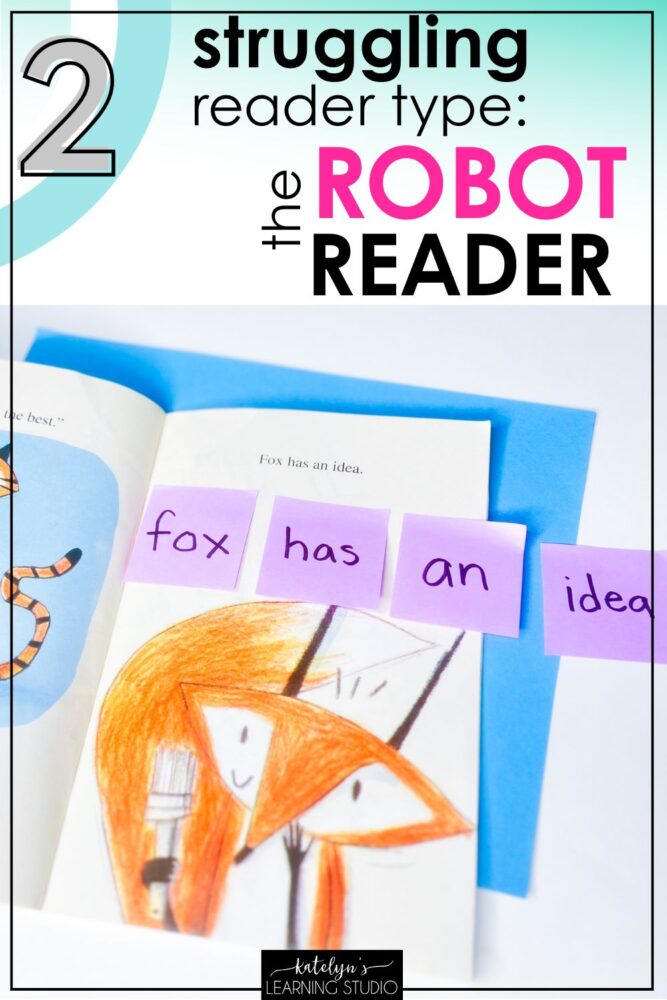
The Robot Reader decodes accurately but reads very slowly with no expression. Discover fluency intervention strategies including orthographic mapping and repeated reading to help this struggling reader type.
You Know This Student!
They’re the one who:
- Reads accurately but SUPER slowly
- Sounds choppy and robotic (no expression at all)
- Can decode words but it takes forever
- Has poor comprehension because they can’t remember what they just read
- Often has strong phonics but weak fluency
- Avoids reading because it’s exhausting
- Gets tired SO quickly
This type of struggling reader needs fluency intervention strategies!
What’s Really Happening
These struggling readers have strong decoding but weak automaticity.
They’re using SO much brain power to decode each word that there’s nothing left for comprehension!
Think of it like learning to drive. At first you’re thinking about EVERY little thing (turn signal, mirror, brake, turn). It’s exhausting! But with practice, it becomes automatic and you can focus on where you’re going.
Robot Readers are still in the “thinking about every movement” phase with reading.
Reading Intervention Strategies for Robot Readers
Build automaticity with high-frequency words using orthographic mapping
Okay, so the Science of Reading has changed how we approach this reading intervention strategy! We don’t just drill flashcards anymore (that doesn’t stick for struggling readers).
Instead, we teach high-frequency words as “heart words” using orthographic mapping.
Here’s how:
- Isolate the tricky part – What part doesn’t follow the rules? (In “said,” the “ai” says /e/ instead of /ā/)
- Map the sounds to letters – Use Elkonin boxes to connect each sound to its spelling
- Mark the heart – Put a heart over the tricky part they need to remember
- Practice in context – Read sentences with the word multiple times
- Write it – Spelling reinforces the mapping!
This is SO different from old-school sight word drills, and it actually makes the words stick in long-term memory!
Use repeated reading for fluency
This is one of the most research-backed reading intervention strategies for struggling readers!
- Pick texts at their independent level (95%+ accuracy)
- Read the same passage 3-5 times over several days
- Track words per minute (they NEED to see their progress!)
- Model fluent reading first (you read, they echo)
The repetition helps words become automatic so they can focus on meaning!
Practice phrase reading
Teach these struggling readers to chunk words into phrases instead of reading word-by-word:
- Use passages with phrase markings (scoops under phrases)
- Practice: “The big brown dog / ran across the yard / to get his ball”
- For big words, chunk syllables: “re-mem-ber” → “remember”
Build reading stamina gradually
- Start SHORT (100-150 words)
- Gradually increase length
- Always check comprehension, understanding is the GOAL!
Try This This Week!
Here’s what works beautifully for this type of struggling reader: Pick a 100-word passage at their independent level.
Time them reading it on Monday (don’t make a big deal of it, just note it).
Have them practice that SAME passage 2-3 times each day Tuesday-Thursday. With a partner, to you, to a stuffed animal, whatever works.
Friday: Time them again and SHOW them the difference!
Most struggling readers improve by 20-40 words per minute in ONE WEEK with the same passage!
The excitement on their face when they realize reading doesn’t have to be this slow? THAT’S the motivation that keeps them going!
Graph it so they can see their progress!
[You can use this FREE Fluency Graph to chart their progress.]
Type 3: The Letter Sounder – Weak Sight Word Recognition
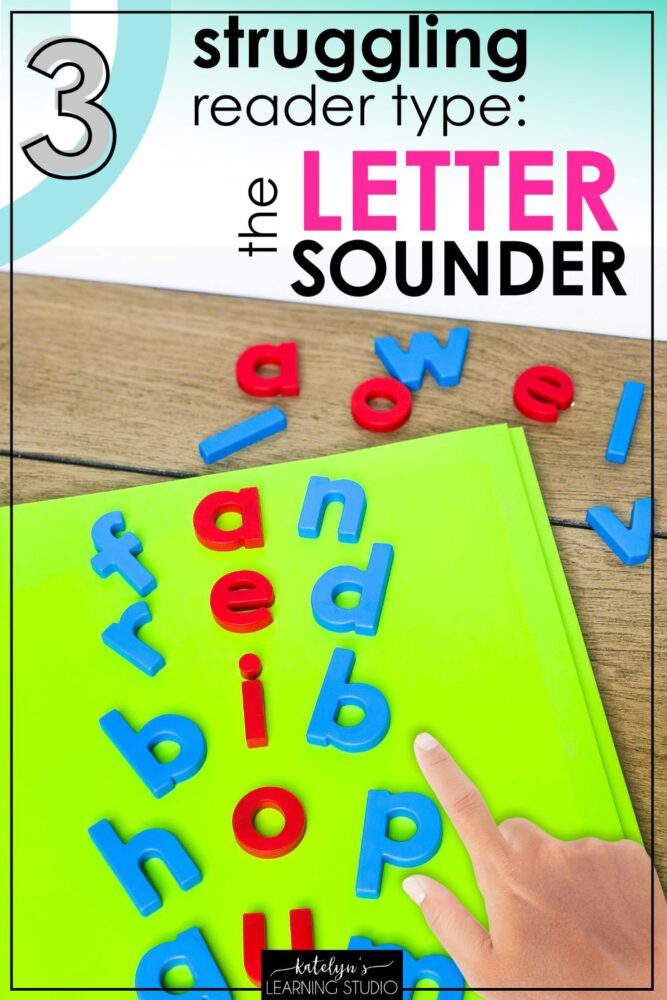
The Letter Sounder sounds out EVERY word EVERY time, even familiar ones. Learn orthographic mapping strategies and heart word instruction to help this struggling reader build automatic word recognition.
You Know This Student!
They’re the one who:
- Sounds out EVERY word, EVERY time (even familiar ones!)
- Says “c-a-t… cat” and then 3 seconds later does it again with the SAME word
- Makes super slow progress
- Doesn’t remember words they’ve read before
- Has weak sight word recognition
- Gets stuck on the same words over and over (even across weeks!)
This type of struggling reader hasn’t developed automatic word recognition yet.
What’s Really Happening
This struggling reader hasn’t developed orthographic mapping (the process of storing words in long-term memory).
They’re treating every single word like it’s brand new!
This usually means weak phonemic awareness, weak visual memory, or incomplete phonics knowledge. They’re stuck in the “partial alphabetic phase” where they’re using SOME letter-sound info but not enough to store words permanently.
Reading Intervention Strategies for Letter Sounders
Strengthen phonemic awareness FIRST
Before they can map letters to sounds, struggling readers need strong phonemic awareness!
Check if they can:
- Segment words into sounds (no letters): “cat” = /c/ /a/ /t/
- Blend sounds: /c/ /a/ /t/ = “cat”
- Manipulate sounds: “Say ‘cat.’ Now say ‘cat’ without the /c/.” (at)
- Substitute sounds: “Change /c/ in ‘cat’ to /b/.” (bat)
If they struggle, spend 5-10 minutes daily on phonemic awareness. This is the FOUNDATION!
[See my Phonemic Awareness Intervention Binder here.]
Teach “heart words” and orthographic mapping through word mapping activities.
Don’t just drill flashcards over and over. Use this reading intervention strategy for struggling readers:
- See it – Look at the whole word
- Map it – Use Elkonin boxes. Say the word slowly, push up a counter for each sound, write the letters
- Mark the tricky part – Heart on anything that doesn’t follow rules
- Write it – Spell while saying each sound
- Read it – In isolation, then in phrases, then sentences
- Review it – Daily for a week, then every few days
This multisensory approach helps it STICK!
Build word recognition through chunks
Teach struggling readers to see PATTERNS, not just individual letters:
- Word families (-at, -an, -it, -op)
- “If you know ‘cat,’ you can read ‘bat,’ ‘hat,’ ‘sat,’ ‘mat’!”
- Common rimes
- Syllable patterns in longer words
Reduce the memory load
Letter Sounders often have TOO many words they’re working on:
- Focus on 5-10 words MAX at a time (not 20-30!)
- Practice in multiple contexts all week
- Don’t move on until 80% are automatic
- Review old words regularly
Try This This Week!
Choose 3-5 high-frequency words they sound out letter-by-letter every time (like: the, was, said).
Teach them explicitly using the mapping approach. Practice daily for one week using different activities:
- Build with magnetic letters
- Write in sand or shaving cream
- Find them in sentences
- Spell on whiteboards
- Read in short phrases
By the end of the week, they should recognize 3-4 automatically (within 1 second)!
When struggling readers SEE that words CAN stick, that they don’t have to sound out “the” every time, it’s like a light bulb!
Put those words on a “Words I Know!” ring or poster. The visual representation is SO motivating.
Type 4: The Plateau – When Reading Intervention Progress Stalls
The Plateau happens when students stop making reading progress despite consistent intervention. Learn how to identify skill gaps (usually multisyllabic words!) and get them unstuck with targeted strategies.
You Know This Student!
They’re the one who:
- Made great progress at first… then stopped
- Has been stuck at the same level for 2-3+ months
- Shows minimal growth despite consistent intervention
- Is getting frustrated (and so are you!)
- Often happens in 2nd-3rd grade
- Can read easy books but struggles with grade-level text
- The gap keeps widening
This is one of the most frustrating types of struggling readers to work with!
What’s Really Happening
This struggling reader has hit a skills ceiling.
They’ve mastered basic phonics (CVC words, blends, digraphs), but they haven’t learned the reading skills for the NEXT level, usually multisyllabic word decoding, complex vowel patterns, or morphology.
You can’t practice your way through a skill you’ve never been taught!
Reading Intervention Strategies When Progress Stalls
Run a diagnostic assessment
Figure out EXACTLY what’s causing the plateau in your reading intervention. Test:
- Multisyllabic word reading (this is the most common issue!)
- Advanced vowel patterns (vowel teams, diphthongs, r-controlled)
- Syllable types and division patterns
- Morphology (prefixes and suffixes)
- Academic vocabulary
Most of the time? Struggling readers hit multisyllabic words and don’t have strategies to tackle them!
Teach the missing skill explicitly
Don’t keep practicing what they already know. Teach what’s MISSING!
If it’s multisyllabic words (most common for struggling readers):
- Teach the 6 syllable types systematically
- Teach syllable division patterns (VCCV, VCV, VV)
- Practice breaking words apart: “basketball” = “bas-ket-ball”
- Use multisyllabic nonsense words so they can’t guess
- Check out my Multisyllabic Intervention Binder
If it’s morphology:
- Teach common prefixes (un-, re-, pre-, dis-)
- Teach common suffixes (-ing, -ed, -er, -est, -ful, -less)
- Show how base words stay the same
- “If you know ‘play,’ you can read ‘playing,’ ‘played,’ ‘player,’ ‘playful’!”
If it’s vocabulary:
- Pre-teach academic vocabulary
- Build background knowledge
- Teach multiple meanings
- Check out these 8 Fun & Engaging Vocabulary Activities
Increase text complexity gradually
- Use texts that practice the new skill
- Gradually add more multisyllabic words
- Start with familiar topics
- Build stamina with longer texts
Address their mindset
Struggling readers who plateau feel defeated. Address it directly!
- “I know reading has felt stuck lately. That’s frustrating!”
- “We’re going to learn how to break apart big words. This is the missing piece.”
- “In three weeks, you’ll read words like ‘important’ and ‘remember’ without help!”
- Celebrate small wins with the NEW skill
Try This This Week!
Give them 15-20 multisyllabic words (2-3 syllables). Like: pencil, napkin, baby, robot, sunset, fantastic, remember, important.
If they struggle with more than half? You found your gap!
Now teach ONE syllable division pattern explicitly. Let’s say VCCV (like “napkin” = nap-kin, “basket” = bas-ket).
Practice this pattern with 10-12 words over two days.
Day 3: Give them 10 words—5 with VCCV and 5 they haven’t learned yet.
Watch them tackle those VCCV words with confidence!
Say: “See? You just learned something new and you can already use it! This is how we’re getting unstuck!”
Type 5: The Avoider – Reading Avoidance and Low Confidence
The Avoider says “I hate reading” and shuts down during reading time. Learn strategies to rebuild trust, identify hidden skill gaps, and restore confidence in this struggling reader type.
You Know This Student!
They’re the one who:
- Says “I don’t like reading” or “I’m bad at reading”
- Suddenly needs to sharpen their pencil/use bathroom/get water when reading starts
- Has skill gaps AND confidence issues
- Shuts down when asked to read aloud
- Is clearly capable of more than they’re showing
- Acts out or puts their head down
- Compares themselves to peers: “I’m the worst reader”
This type of struggling reader needs both skill intervention AND confidence building!
What’s Really Happening
This struggling reader has experienced repeated failure and developed a protective avoidance strategy.
They’ve learned: If I don’t try, I can’t fail.
They’d rather look “lazy” than “dumb.”
Underneath is usually a real skill gap (could be any type above) PLUS damaged confidence. You have to address BOTH in your reading intervention!
Reading Intervention Strategies for Avoiders
Rebuild trust and safety FIRST
Nothing else works with struggling readers until they feel safe:
- Private intervention – Not in front of peers at first!
- Start with success – Give them EASY material for the first sessions
- Name it – “I know reading has been hard and frustrating. I get it. We’re going to change that together.”
- No pressure – If they shut down, say “Okay, let’s try something different”
- Build the relationship – Sometimes you just talk for a session. Find out what they love!
Identify the actual skill gaps
Once you have trust with these struggling readers, figure out what they’re avoiding:
- Observe during low-pressure activities
- What specifically are they avoiding? Decoding? Reading aloud? Comprehension?
- Often Avoiders are Guessers or Plateau students underneath
- Address the real skill gap (use strategies from other types!)
Build competence through tiny wins
Struggling readers with avoidance need to experience success FAST in your reading intervention!
- Set goals so small they can’t fail: “Today we’re reading 3 sentences”
- Celebrate specifically: “Last week you read 5 words. Today you read 9! Look at your brain learning!”
- Use high-interest materials: sports, gaming, animals… whatever hooks them!
- Give choices: “Sharks or volcanoes today?”
- Keep sessions short at first. 15 minutes of engagement beats 30 minutes of resistance!
Change the narrative about struggling readers
Separate their identity from their reading level:
- NOT: “You’re a struggling reader”
- INSTEAD: “You’re learning to read better” / “Your brain is building new pathways”
- Growth mindset: “You can’t read this YET, but you will”
- Point out strengths: “You have great ideas!” / “You’re good at predicting!”
Use interest-based supports
While building skills in reading intervention, keep them engaged with stories:
- Audiobooks with physical books
- Graphic novels
- Partner reading (trade pages)
- Read TO them sometimes
Keep them engaged with literature while you fix the skills!
Try This Tomorrow!
First session: Find ONE thing they can do successfully (even just letter sounds or CVC words) and spend the WHOLE session on that level.
No struggle. No failure. Just success.
End with: “See? You’re already good at this part! Now we’re going to build on what you already can do.”
Second session: Introduce ONE small new skill, building directly on what they did successfully.
Example:
- Session 1: Read 20 CVC words successfully
- Session 2: Read 15 CVC words (success!) + 5 words with blends (new, but building on what they know)
Keep success rate high (80%+) while gradually increasing challenge!
Also: Let them SEE their progress! Graph words per minute, keep a “Words I Can Read” list, track books completed.
Struggling readers with avoidance need concrete proof they’re improving!
When You Have Multiple Types of Struggling Readers
Here’s the Reality
Most struggling readers don’t fit perfectly into one box!
You might have a Guesser who’s ALSO an Avoider. Or a Robot Reader who hit a Plateau. That’s totally normal in reading intervention!
What to Do
1. Identify the PRIMARY barrier
What’s the BIGGEST thing holding this struggling reader back RIGHT NOW?
- Won’t engage → Start with Avoider strategies
- Can’t decode accurately → Guesser or Letter Sounder strategies
- Decode but don’t understand → Robot Reader strategies
- Stopped progressing → Plateau strategies
2. Start there
Don’t try to fix everything at once in your reading intervention! Focus on the biggest barrier.
3. Layer in more as you go
Once you see progress, address other issues. Like:
- A Guesser improves decoding → Add fluency work
- An Avoider rebuilds confidence → Add explicit multisyllabic instruction
Can You Group Struggling Readers Together?
Sometimes!
Good pairings for reading intervention groups:
- Robot Readers + Letter Sounders = Both need automaticity
- Guessers + Plateau = Both might need phonics/multisyllabic work
Challenging pairings:
- Avoiders need individual support at first
- Guessers + Robot Readers = Need opposite things!
Best approach: Group by PRIMARY SKILL needed, not just reading level!
What Timeline Should You Expect for Reading Intervention?
- 4-6 weeks: You should see SOME progress with struggling readers
- 8-12 weeks: Measurable progress in accuracy, fluency, or confidence
- 12-20 weeks: Significant, sustained growth
If you’re NOT seeing progress after 6-8 weeks in reading intervention: Stop and reassess! You might have:
- Misidentified the barrier
- Not been explicit enough
- A student who needs additional evaluation or RTI support
Don’t keep doing the same intervention strategies for months if they’re not working!
Your Next Steps for Helping Struggling Readers
This Week:
- Identify each student’s primary barrier – Which of the 5 types of struggling readers are they?
- Gather materials – What do you need for your reading intervention?
- Set one small goal – What will you see in 2 weeks if it’s working?
This Month:
- Be consistent – These reading intervention strategies work with regular practice!
- Track progress – Words per minute, accuracy, confidence
- Adjust as needed – Try different strategies after 3-4 weeks if needed
This Year:
- Celebrate wins – Notice and name progress with your struggling readers!
- Build independence – Gradually release responsibility
- Communicate – Help students and parents see growth
Common Questions About Struggling Readers
Q: What are the most common types of struggling readers?
A: The five most common types of struggling readers are: The Guesser (relies on context clues instead of decoding), The Robot Reader (accurate but slow with poor fluency), The Letter Sounder (weak automaticity and sight word recognition), The Plateau (progress has stalled), and The Avoider (reading avoidance and low confidence). Each type needs different reading intervention strategies!
Q: How do I know which reading intervention my student needs?
A: Observe their specific reading behaviors and run diagnostic assessments to identify whether they struggle with decoding accuracy, reading fluency, sight word recognition, multisyllabic words, or confidence. The type of struggling reader determines which intervention strategies will work best.
Q: What is the best reading intervention for struggling readers?
A: The best reading intervention strategies target the specific skill gap—systematic phonics for decoding issues, repeated reading and orthographic mapping for fluency, heart words instruction for sight word recognition, and syllable instruction for multisyllabic word difficulties. Different types of struggling readers need different approaches!
Q: How long does reading intervention take to work?
A: You should see some progress with struggling readers in 4-6 weeks, measurable progress in 8-12 weeks, and significant growth in 12-20 weeks with consistent, targeted reading intervention strategies. If you don’t see any progress after 6-8 weeks, reassess and adjust your approach or consider additional RTI support.
Q: Can I use these strategies with my whole class or just in intervention?
A: These reading intervention strategies work great in small group instruction, RTI groups, and one-on-one intervention sessions. You can also adapt many of these strategies for whole-class instruction, especially for supporting struggling readers in your classroom!
Grab Your Free Guide to the 5 Types of Struggling Readers!
Want a quick-reference version to use during reading intervention planning?
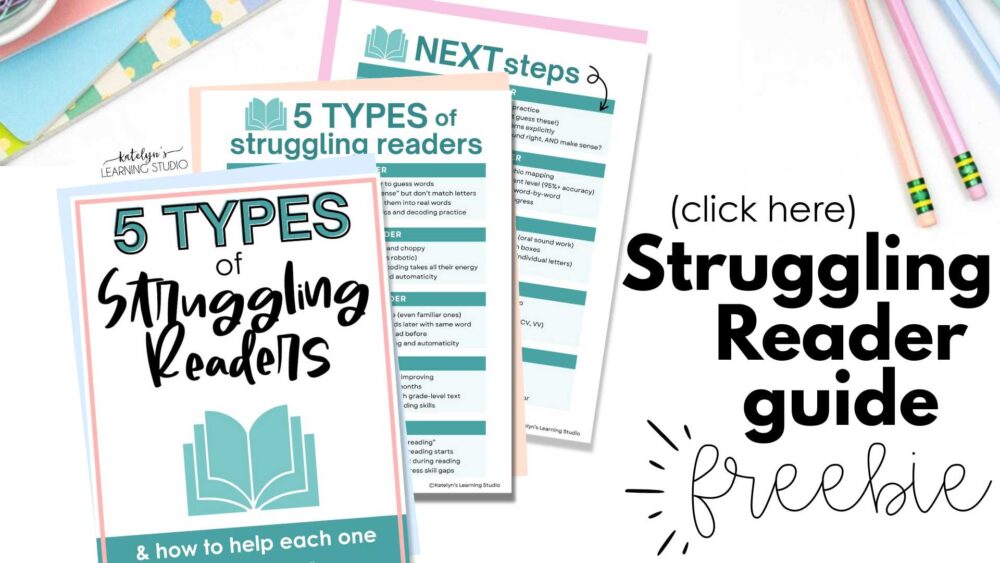
Download your FREE Quick Reference Guide to identify the 5 types of struggling readers and learn which intervention strategies work best for each type!
Download the FREE Student Type Quick-Reference Guide with:
✅ Observable behaviors checklist for each type of struggling reader
✅ Quick diagnostic questions
✅ Reading intervention strategies summary for each type
✅ Progress monitoring tips
✅ Grouping recommendations for intervention groups
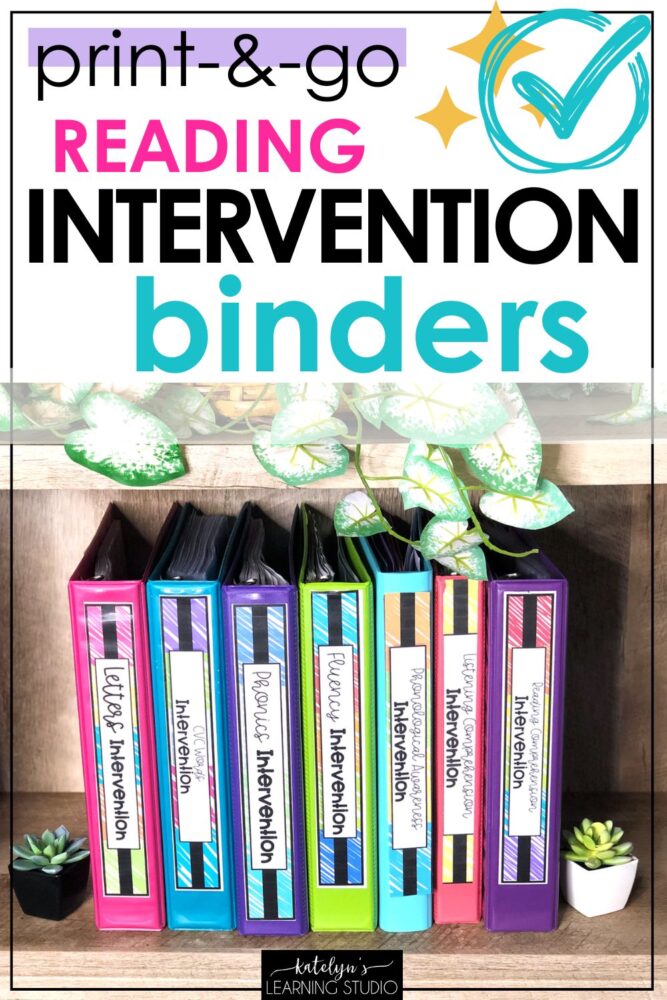
Ready-to-use reading intervention materials for all 5 types of struggling readers! These print-and-go binders include systematic phonics, fluency passages, heart words activities, multisyllabic decoding practice, and confidence-building materials.
Need Ready-to-Use Reading Intervention Materials?
Once you know which type of struggling reader you’re working with, having the right materials makes your reading intervention SO much easier!
My Reading Intervention Binders include:
- Systematic phonics activities for Guessers
- Fluency passages and repeated reading trackers for Robot Readers
- Orthographic mapping for Letter Sounders
- Multisyllabic word decoding practice for Plateau students
- High-interest, confidence-building materials for Avoiders
Everything is print-and-go so you can spend time TEACHING struggling readers instead of searching for materials!
👉 Check Out the Intervention System Here
One More Thing…
I know working with struggling readers feels overwhelming sometimes.
Too many students. Not enough time. Progress monitoring pressure. I get it!
But here’s what I want you to remember: You don’t have to fix everything at once.
Most struggling readers aren’t missing a hundred skills. They’re missing one or two KEY skills acting as bottlenecks.
Teach those missing pieces explicitly with the right reading intervention strategies, and progress happens faster than you’d expect!
You’ve got this. Your struggling readers are lucky to have you! 💙
Happy teaching and reading!